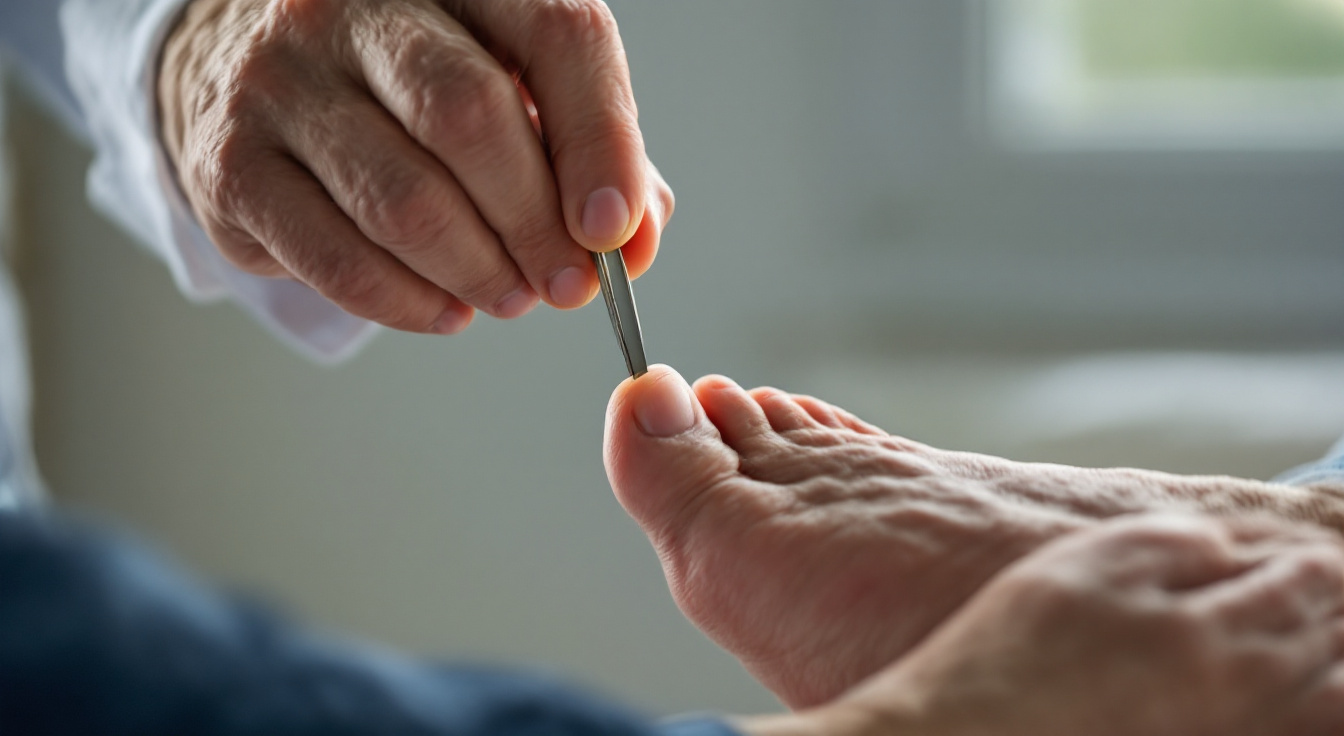
If you're reading this at 9 or 10 at night, sock off, foot propped up, watching the skin on your toes twitch while it burns like it's pressed against a stove — you've probably already tried a few things.
The massager that made it worse. The compression socks you now dread putting on. Maybe a vitamin B12 supplement, because someone in a forum swore by it and you were desperate enough to believe them.
None of that fully explains the strangest part: how the same foot can burn and feel numb at the same time.
It's not vitamin B. It's not just "poor circulation." Those are the two explanations people reach for most — because they're the simplest ones, not necessarily the right ones.
Vitamin B12 deficiency can cause nerve damage — but only when there's an actual, diagnosed deficiency, which is far from every case. And "poor circulation" is a real factor in some forms of neuropathy, but it doesn't explain why pain and numbness would show up together, in the same spot.
And "neuropathy" isn't really one thing to begin with. Doctors split it by what's behind it — diabetic neuropathy, idiopathic (no identified cause), alcohol-related, chemotherapy-induced, and more. Different label, same result: the nerve fibers themselves stop working the way they should.
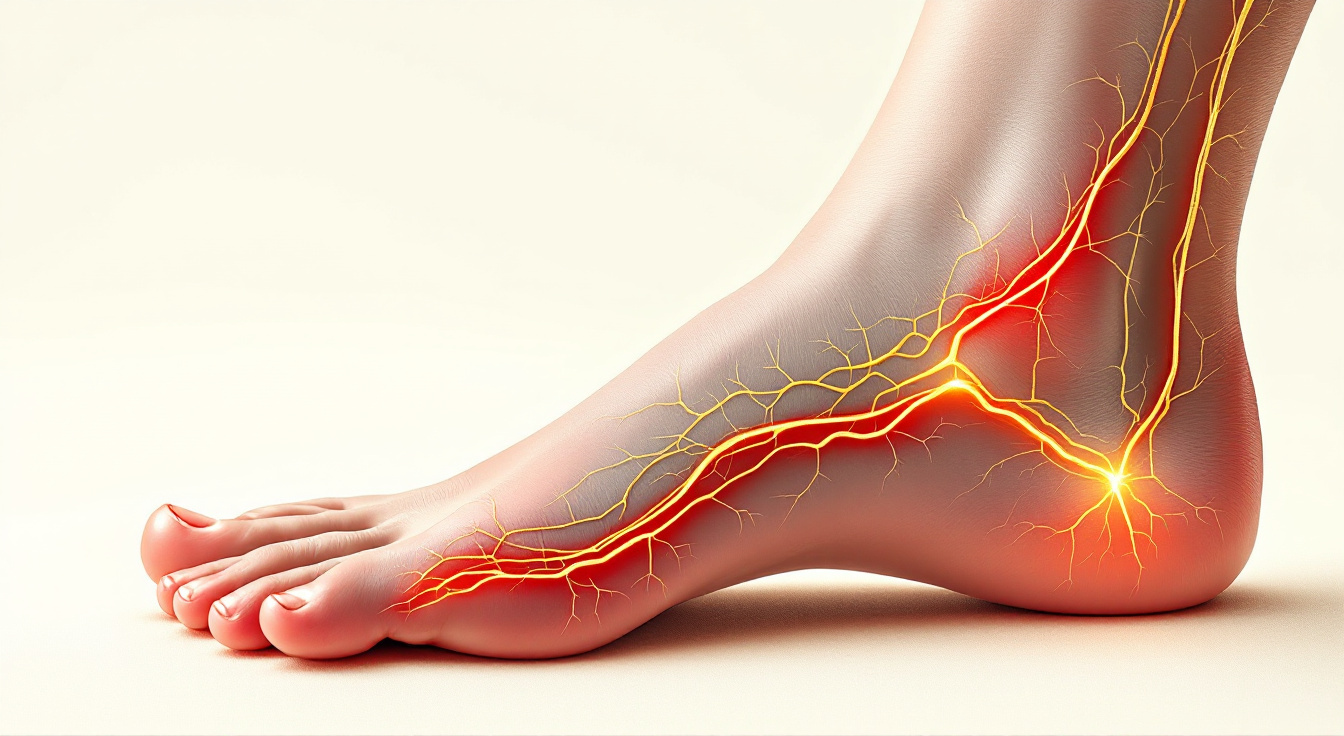
Two separate nerve processes, happening in the same foot at the same time.
According to the National Institute of Neurological Disorders and Stroke (NINDS), peripheral neuropathy symptoms often come from two separate processes running at once: some nerve fibers become overactive and fire pain signals on their own, while other fibers — the ones responsible for normal, protective sensation — are gradually lost.
That's why a single foot can burn and go numb together, and why treating only one side of that equation rarely feels like enough.
But that only describes what's happening. It doesn't answer the question that actually matters: what makes a nerve fiber start misfiring in the first place — often years before anyone gets a diagnosis?
That's the part almost nobody checks. Not the standard panel your doctor runs, not the forums recommending the next supplement. Something is physically interfering with the signal itself — and once you see what it is, the massager, the compression socks, and the B12 all make a lot more sense as things that were never going to be enough on their own.
Go somewhere that still lives mostly outside, cooks in metal and clay instead of plastic, and doesn't touch a synthetic fiber from morning to night, and this kind of nerve pain barely comes up in conversation — which raises an uncomfortable question about why nobody here is in a hurry to explain it.
There's more money in a pill you refill every month than in a problem that quietly stops needing one.
And it doesn't stay the same. Left alone, that interference tends to spread — what starts in a couple of toes shows up in the whole foot, then the hands, on its own timeline, not yours.
What people are actually trying at night. Alongside whatever their doctor already has them doing, a number of the people we've heard from have added one small step to their evening — not a pill, not a gadget, and not something that takes long.
Chances are, whatever it takes is already sitting in your kitchen — most people don't have to buy a single thing to try it. No prescription, no refill, and none of the side-effects list stapled to the one your doctor already gave you.

The video below shows exactly what it is — and how people are doing it.
That's the actual goal for most people — not "zero pain" as an abstract idea, but getting back to the specific thing neuropathy took from them.
Here's the full two-minute walkthrough — what's actually blocking the signal, and exactly what people are doing to get their foot back.